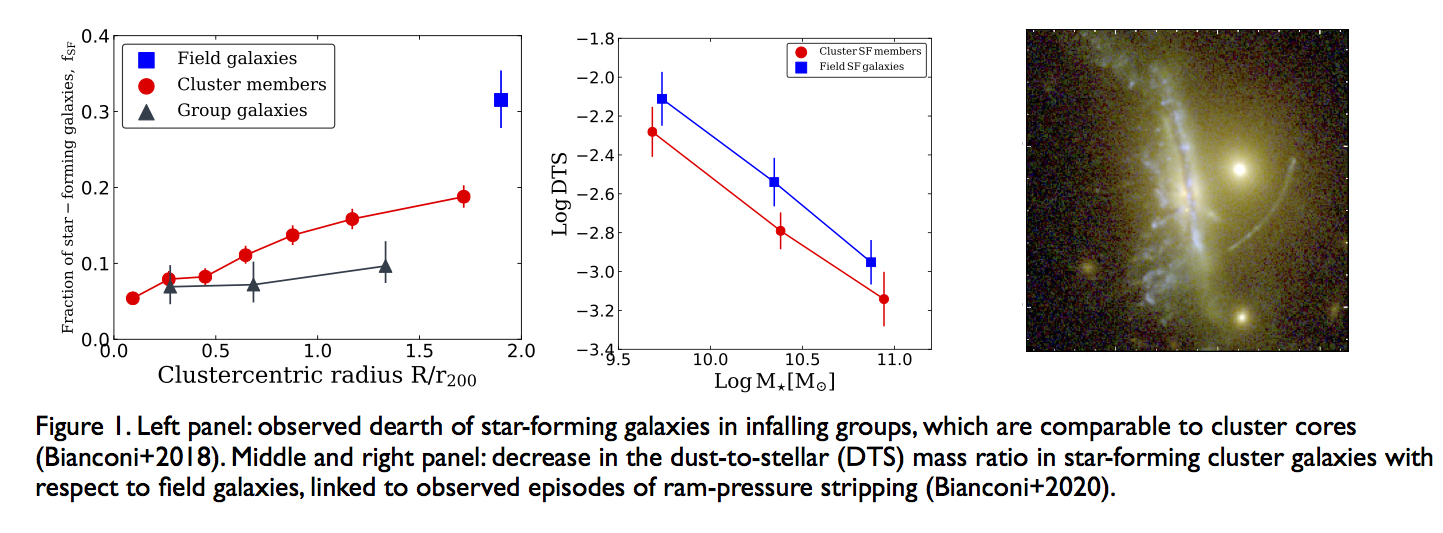
Effects of environment on galaxy evolution. The majority of galaxies in clusters present old and passive stellar populations, with little to no star formation and central black hole activity, and spheroidal or elliptical morphology. This trend is increasingly evident moving from the sparsely populated outskirts of clusters, occupied by late-type galaxies, to the dense central region of clusters. This suggests that the environment can influence and accelerate the evolution of infalling galaxies, in particular through different processes such as ram-pressure stripping and gravitational encounters with other galaxies. Bianconi+2016, 2018, 2020 confirmed the dual effect of the cluster environment, in promoting gas instabilities and in preventing further accretion of gas on galaxies. I presented the first direct evidences of pre-processing in a population of newly discovered infalling groups, caught at their first encounter with the cluster environment (left panel in Figure 1, Bianconi+ 2018). Thanks to the extensive LoCuSS dataset combining GALEX, SDSS, UKIRT, WISE, Spitzer/ MIPS and Herschel/PACS+SPIRE photometry, Bianconi+2020 measured the decrease of warm-dust emission in the SED of star-forming cluster galaxies, linked to episodes of ram-pressure stripping (central and right panel of Figure 1).
Strongly-lensed gravitational waves.
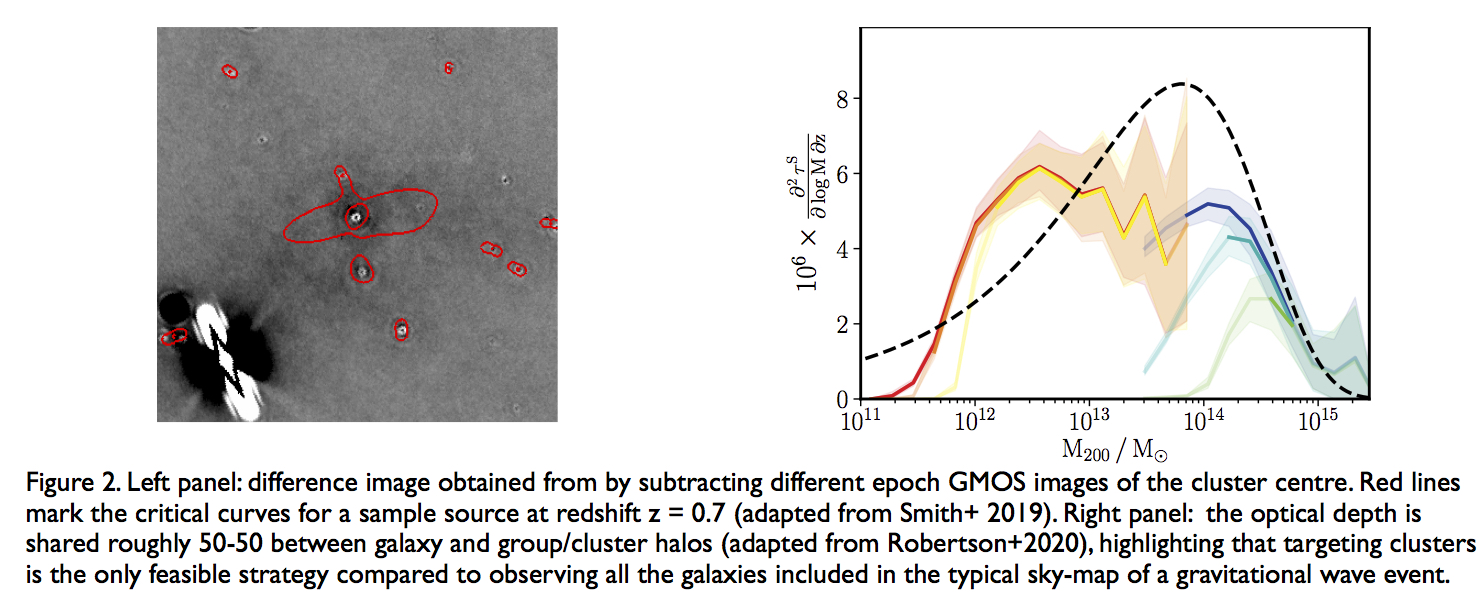
Discovery of strongly-lensed gravitational wave sources will unveil binary compact objects at higher redshifts and lower intrinsic luminosities than is possible without lensing. Such systems will yield unprecedented constraints on the mass distribution in galaxy clusters, measurements of the polarization of GWs, tests of General Relativity, and constraints on the Hubble parameter. I am the P.I. of the follow-up campaign which set up the machinery to (i) identify the strong- lensing cluster(s) within the sky localisation of a GW detection within 15 minutes of a strain signal being detected by LIGO-Virgo and thus quickly trigger a Gemini-GMOS observation, (ii) identify any transient sources in the GMOS data using difference imaging techniques, and (iii) predict the next appearance of the GW detection and its EM counterpart based on detailed gravitational lens models. This is the most sensitive continuum search to date, reaching an apparent magnitude limit before correction for lens magnification that is more than ∼2 magnitudes fainter than previous searches.
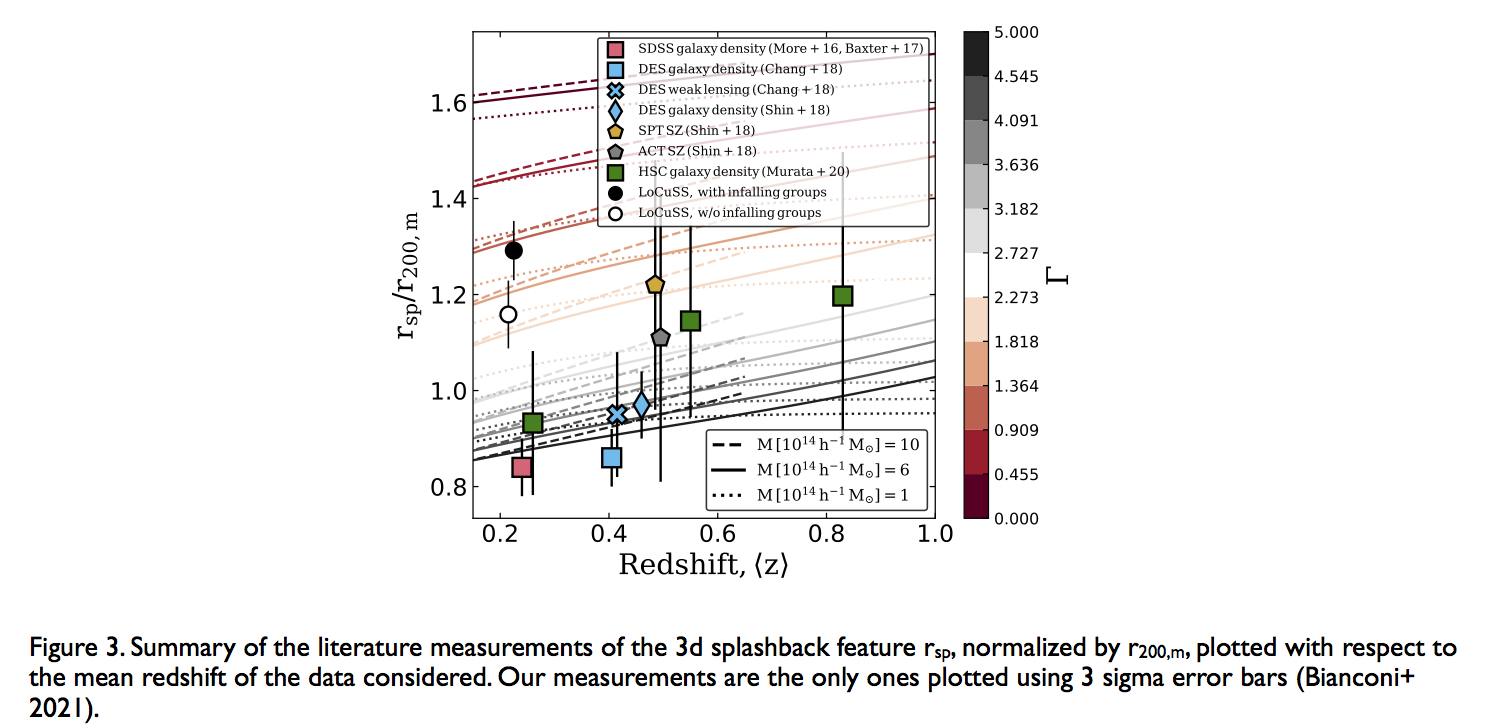
Shape of the dark matter haloes in massive clusters. The extensive spectroscopic coverage of the LoCuSS survey allowed us to identify cluster members of a sample of 20 clusters beyond three times their viral radius. This makes our sample of galaxy members the ideal set of test particles to study the structure of the clusters dark matter haloes. I led the first work realising the detection of the splashback feature using spectroscopically confirmed cluster members, and dissecting the effect of cluster dynamical state on the occurrence of this feature. Using a wide range of proxies, from weak-lensing signal to X-ray maps, we note that clusters that are classified as old and dynamically inactive present stronger signatures of the splashback feature, with respect to younger, more active clusters. The presence of infalling groups in the surroundings of the clusters is used as indicator of the accretion rate of the clusters, which impacts heavily the location of the splashback feature. We are directly observing how fundamental dynamical properties of clusters reverberate across vastly different physical scales (Bianconi+ 2021).
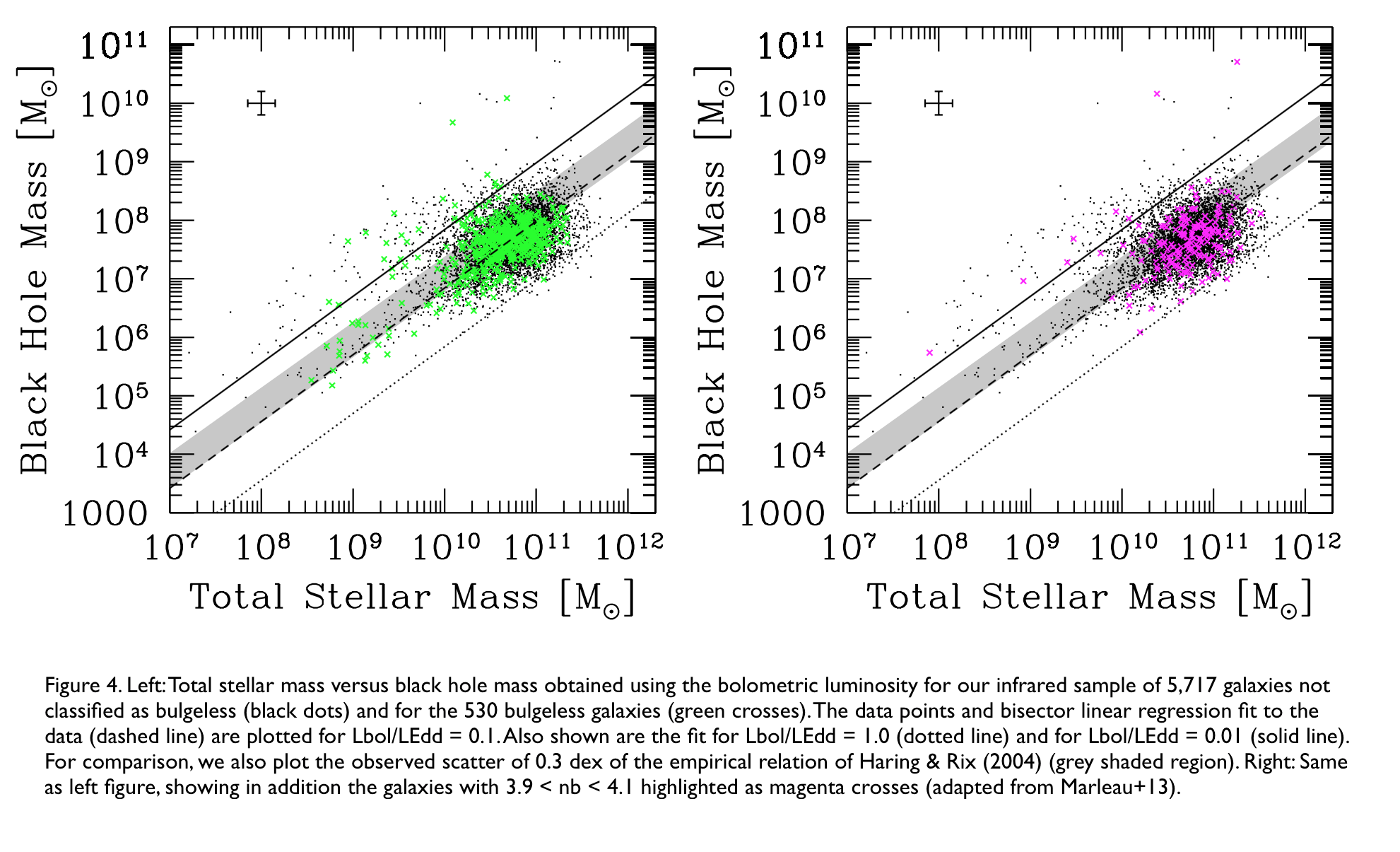
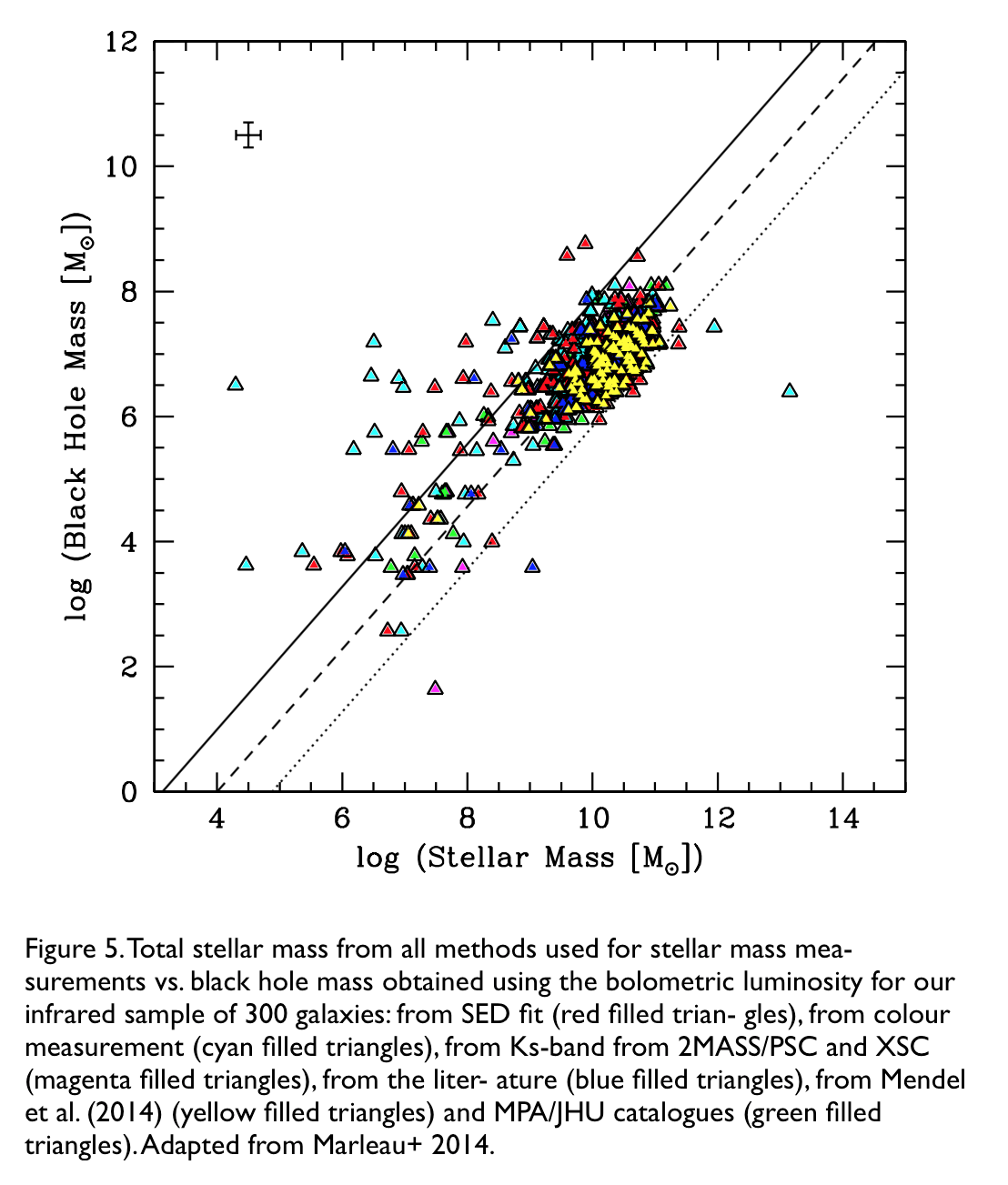
Ubiquity of central massive black holes. Growing evidences are in favour of black holes located in the central regions of different morphological types of galaxies. We studied the populating fraction of black holes in a sample of quantitatively classified 1.12 million SDSS galaxies, finding the correlation between the mass of the black hole and the total stellar mass of the host to exist also in bulgeless system. This result was further expanded by the analysis of nearby galaxies, including dwarfs objects, that display infrared signature of black hole accretion activity.
Effect of bulk motions on the dynamics and growth of instabilities in the intracluster medium. In the coming years, observational X-ray astronomy will progress into a new era thanks to the launch of the next generation of satellites, such as ASTRO-H and ATHENA+. The precision of the new spectrometers will allow to observe the effect of turbulent and coherent motions in the intracluster medium (ICM) spectra. We studied simple models of massive galaxy clusters using a set of different rotation laws to put constraint on the amplitude of the ICM rotation velocity and compared it with the ellipticity profiles of observed clusters. We demonstrated the capabilities of the new instruments to measure rotational velocities down to few hundreds of kilometers per second. Furthermore, we considered the stability of a weakly magnetized plasma, finding that magnetorotational instability can influence the dynamics and evolution of cool core clusters.

 Matteo Bianconi